A speck of dust on a camera lens almost never shows in a photo. A fingerprint does. Skin grease scatters light across the glass, so a shot into low winter sun or under street lights comes out soft, washed out and ringed with flare, and most people blame the lens or the autofocus first.
Knowing how to clean a camera lens properly takes two minutes and very little kit: blow the grit off, lift the grease with a lens cleaner on a microfibre cloth, and leave the inside of the lens to a repairer. The order matters more than the products, because nearly every scratched front element got that way from a dry cloth dragged over sand.
Last checked: November 2026
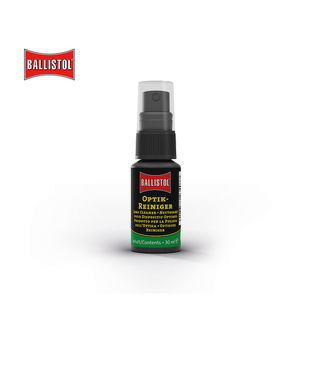
The short version: point the lens down and puff the dust off with a blower bulb, sweep any grit away with a soft lens brush, then spray one or two pumps of Ballistol Optics Cleaner onto a clean microfibre cloth (never onto the lens) and wipe in a spiral from the centre out. Polish dry with a clean part of the cloth.
| Quick facts | |
|---|---|
| Time needed | About 2 minutes per lens, plus a minute for a filter |
| You'll need | A blower bulb, a soft lens brush, Ballistol Optics Cleaner (30ml spray) and two clean microfibre cloths |
| Clean it when | You can see a smear or fingerprint, or pictures show haze or extra flare. Dust alone can wait. |
| Works on | Front and rear lens elements, protective and UV filters, viewfinder eyepieces, phone, dashcam and action camera lenses |
| Leave alone | The inside of the lens, the image sensor and the mirror of a DSLR |
| Avoid | Tissues, kitchen roll, T-shirts, window cleaner, solvents and cans of compressed air |
In this guide
What kit do you need for lens cleaning?
A blower bulb does more for a lens than any cloth, because it shifts grit without touching the coating. The rubber squeeze type from a camera shop is all you need. Cans of compressed air are a poor swap: tilted or shaken, they can spit cold liquid propellant that leaves marks on the glass.
- A soft lens brush for grit the blower won't move. Keep the cap on it so the bristles don't pick up skin oil.
- A lens cleaner. Ballistol Optics Cleaner is alcohol-based, so it evaporates completely and leaves no water marks or residue. It was developed with Leica Sport Optics for high-quality optics, is safe on plastic lenses and contains no silicone, PTFE or acid.
- Two microfibre cloths: one to clean with, one kept dry for polishing. Store them in a zip bag, not loose in a jacket pocket.
The same 30ml spray is what shooters use on scopes and binoculars, and it slips into a camera bag pocket. It sits in our Ballistol Technology range of specialist cleaners.
How to clean a camera lens step by step
Grit comes off before anything touches the glass, every time. Skip that and the cloth turns into fine sandpaper. With the lens on the camera or off it, work in good light so you can see what you're shifting.
- Switch the camera off. If you take the lens off, fit the body cap straight away so dust can't get onto the sensor.
- Hold the lens facing down and give the front element four or five firm puffs with the blower, so dust falls away rather than settling back.
- Sweep the edges gently with the lens brush, where dust collects against the barrel. Puff once more.
- Spray one or two pumps of Optics Cleaner onto the microfibre cloth, not the lens, so no liquid can run behind the front element.
- Wipe in a slow spiral from the centre of the glass to the edge, with no more pressure than the weight of your fingers.
- Polish with the dry cloth until the glass is clear. If a smear is left, repeat once with a fresh part of the cloth rather than pressing harder.
- Put the front cap back on, and wipe the inside of the cap too: dust in there ends up straight back on the glass.
To check the result, shine a phone torch across the glass at a low angle in a dim room. A clean front element shows only the even coloured sheen of its coatings. Streaks, swirls and the outline of a fingerprint mean the cloth needs washing or turning to a clean side.
Should you clean the rear element and filters?
The rear element is the small glass at the mount end, and it needs cleaning far less often than the front because it lives under a rear cap. It also matters more. A smudge there sits close to the sensor and shows up in pictures, so treat it gently with the same blower, brush and cloth method, and only when you can see a mark.
Protective and UV filters get the same treatment on both sides. Take the filter off to do the back, since grease can be trapped between filter and lens. A filter that stays hazy after two cleans is usually scratched or its coating has worn, and replacing it is cheaper than chasing it.
Viewfinder eyepieces pick up eyelash grease and make the whole view look foggy. A quick wipe with the cleaner on the cloth sorts them out.
Dashcams, action cameras and phone lenses
Small camera lenses in cars and on bikes collect a film that a dry thumb only spreads around. On winter roads, spray from gritting dries on a dashcam, reversing camera or bike-mounted action camera as a grey, salty haze, and footage turns soft just when you might need it.
Puff or rinse off the grit first (a reversing camera on the bumper can take a splash of clean water), then use the cleaner on the cloth exactly as for a camera lens. A phone lens mostly picks up pocket lint and skin oil, so give it a wipe before an important photo rather than using your sleeve. The inside of a windscreen in front of a dashcam smears too; our guide to cleaning windscreen glass covers that.
What should never touch a camera lens?
The habit that does the most harm is a breath and a quick rub on a T-shirt. Fabric carries dust from your pocket, and breath adds moisture but nothing that dissolves skin oil, so the grease is pushed around while the grit does the damage.
- Tissues and kitchen roll. Wood fibres scratch lens coatings and leave lint.
- Window and kitchen sprays. Made for panes and worktops, they can leave streaks and residue on optical coatings.
- Solvents such as nail varnish remover or white spirit, which can attack plastic lens parts and barrels.
- Oil of any kind on the glass, including gun oil and lubricants.
- Pressure. If a mark won't shift with light wiping, it's either inside the lens or a scratch, and pressing harder won't change that.
Don't unscrew lens elements or try to clean the sensor with a lens cloth. Sensor cleaning is a separate job with its own swabs, and many camera shops in the UK will do it for you.
How do you stop condensation and fungus in a UK winter?
Moisture is the bigger long-term risk to a lens in Britain than dirt. Carry a cold camera into a warm house and the glass drops below the dew point of the room air, so water condenses on the outside and, worse, inside the lens; the Met Office explains dew point if you want the science.
- Before you go indoors, put the camera in a sealable bag or close it in its camera bag.
- Leave it sealed for an hour or two so it warms slowly to room temperature. The moisture then forms on the bag, not the glass.
- If the front element mists outdoors, let it clear on its own rather than wiping water across the coating. Clean it once it is dry.
Fungus grows in damp, still air, and a lens left for months in a camera bag in a cold spare room or a loft is the classic case. Store lenses dry, in a room that is heated, with a sachet of silica gel in the box, and take them out and use them now and then. Never pack a wet camera away sealed: open the bag and let it dry first.
After a day at the coast, wipe metal tripod leg locks, clamps and quick-release plates with a cloth barely dampened with Ballistol Universal Oil, which protects metal against corrosion from salt air. Keep it well away from the glass, and use the Optics Cleaner for anything optical. For metal contacts and stiff mechanical parts on older cameras, see Ballistol on electrical contacts and equipment.
| Job | Product | Why |
|---|---|---|
| Front and rear elements, filters, eyepieces | Optics Cleaner | Alcohol-based, evaporates completely, safe on plastic lenses |
| Phone, dashcam and action camera lenses | Optics Cleaner | Lifts road film and skin oil without water marks |
| Metal tripod legs, clamps and plates after salt air | Universal Oil | Leaves a thin film that protects metal against corrosion |
Shooters looking after binoculars and riflescopes will find the field version of this routine in our rifle scope and binocular cleaning guide. The cleaner is highly flammable and irritates eyes, so use it away from heat and flames, never spray towards your face, and keep it from children. Safety data sheets are in our technical data library.
Questions people ask
How do you clean the inside of a camera lens? You don't clean the inside of a camera lens at home; it needs a repairer, because the elements have to be removed and realigned. A few specks of dust inside are normal and rarely show in photos, but haze or fungus inside is worth a professional service.
Can you use a glasses cloth on a camera lens? Yes, a clean microfibre glasses cloth is fine for a camera lens. Blow the grit off first and wash the cloth regularly without fabric conditioner, which leaves a greasy film.
Is it OK to breathe on a camera lens before wiping it? Breathing on a camera lens is better avoided, because it adds moisture and can spray tiny droplets of saliva without cutting through skin grease. A lens cleaner on a microfibre cloth does the job properly and evaporates without marks.
How can you tell if a camera lens has fungus? Camera lens fungus shows as fine, branching threads or a web-like patch inside the glass when you shine a torch through the lens from the back. It cannot be wiped off from outside, so take the lens to a camera repairer and store your other lenses somewhere drier.
How often should you clean a camera lens? Clean a camera lens only when you can see a smear or fingerprint, or your pictures show haze or extra flare. Dust on the front element rarely affects images, and every wipe carries a small risk to the coatings, so less is better.
Ballistol Optics Cleaner keeps camera lenses, filters and eyepieces clear, and the same spray looks after glasses, binoculars and scopes. For advice on a particular lens or coating, call +44 (0) 7817 267314 or email sales@ballistol.co.uk.
Written by Ballistol UK. How we write and check our guides.
More guides: How to Clean Glasses Lenses · How to Clean Windscreen Glass · Gifts for Hunters and Stalkers
This guide is general advice. If you're unsure whether a product suits your item, contact Ballistol UK or a qualified professional first, and don't use it until your concerns have been answered.