A drawer that sticks, a lock that grinds, a car door seal that freezes to the frame on a frosty morning. All three get a quick squirt of lubricant spray, and quite often it's the wrong one. An oily spray in a dusty lock turns to black paste within a few months.
The DIY shop shelf looks confusing, but there are only three types to choose between.
Last checked: November 2026
The short version: use a dry PTFE lubricant spray such as Ballistol PTFE Spray where dust and grit are the problem (locks, drawer runners, sliding doors, cables). Use a silicone lubricant on rubber and plastic seals. Use a thin oil where metal needs protecting from rust or a part has seized. Bike chains need a chain lube.
| Quick facts | |
|---|---|
| Main types | Dry PTFE spray, silicone lubricant, oil lubricant spray |
| Spraying distance | 15 to 20 cm for a dry PTFE spray |
| Drying time | A few minutes for PTFE spray before you use the part |
| Amount | 2 or 3 short bursts for a lock; one quick pass along a drawer runner |
| Keep off | Brake discs and pads, floors and steps, windscreens, food-contact surfaces |
In this guide
- What are the main types of lubricant spray?
- Which lubricant spray for which job?
- When should you use a dry PTFE lubricant spray?
- How to apply a dry lubricant spray step by step
- When is a silicone lubricant the better choice?
- When do you need an oil lubricant spray instead?
- What about bike and e-bike chains?
- What mistakes do people make with lubricant sprays?
- How can you tell the lubricant spray has worked?
- Questions people ask
What are the main types of lubricant spray?
The main types of lubricant spray are dry PTFE sprays, silicone lubricants and oil lubricant sprays. A dry spray leaves a thin solid film, silicone leaves a slippery liquid film that suits rubber, and an oil leaves a wet film that creeps into gaps and keeps damp off metal.
Which lubricant spray for which job?
Choosing a lubricant spray comes down to what the part is made of and what it lives with: dust, water, frost or friction.
| Job | Product | Why |
|---|---|---|
| Locks, drawer runners, sliding doors, curtain tracks, cables | PTFE Spray | Dries to a clean PTFE film that dust doesn't stick to |
| Garage door hinges and rollers, trolley wheels, plastic gears | PTFE Spray | Works on metal, plastic, wood and rubber without a wet film |
| Car door and boot seals, uPVC window gaskets, hose O-rings | Silicone Oil | Keeps rubber supple so it doesn't dry out, crack or stick |
| Seized nuts, rusty hinges, tools stored in a damp shed | Universal Oil | Creeps into fine gaps and leaves a film that protects against rust |
| Bike and e-bike chains in wet weather | Bike X Lube | Chain lube that repels water and resists salt |
See the full Technology range and the home and household collection.
When should you use a dry PTFE lubricant spray?
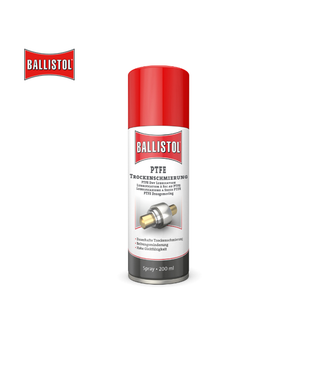
Use a dry PTFE lubricant spray when a part slides or turns in dusty or gritty conditions and an oily film would collect dirt. Ballistol PTFE Spray leaves a thin layer of PTFE, the material better known as Teflon, once its solvent flashes off a few minutes after spraying.
Reach for it on drawer runners, sliding wardrobe doors, curtain tracks, door locks, car aerials and garage doors. The dry film is non-conductive, so it suits mechanisms near electronics too. Our guide on how to lubricate a garage door shows it on rollers and hinges.
It comes from F.W. Klever GmbH, which has made Ballistol in Germany since 1904. Don't use it on anything that touches food or drink.
How to apply a dry lubricant spray step by step
Applying a dry lubricant spray takes about five minutes for a lock or a set of drawer runners, most of it spent cleaning. The surface must be clean and dry first.
- Wipe off dirt and old lubricant with a dry cloth, and let the surface dry fully. A vacuum nozzle clears grit from the corners of tracks.
- Shake the can well for about 10 seconds.
- Hold it 15 to 20 cm away and spray a thin, even coat. Use the straw for a keyway: 2 or 3 short bursts are plenty.
- Work the part a few times: turn the key, slide the drawer or open and close the door.
- Leave it a few minutes to dry before using the part normally.
Spray with a window open and keep the can away from heat, sparks and naked flames. HSE's guidance on handling flammable liquids safely explains why ventilation matters with solvents. The safety data sheets for every can are on our technical data page.
When is a silicone lubricant the better choice?
A silicone lubricant is the better choice on rubber and soft plastic, because it keeps seals supple instead of drying them out. Ballistol Silicone Oil suits car door and boot seals, rubber gaskets on uPVC windows and doors, and the O-rings on hose fittings and pump sprayers.
In a UK November it earns its keep on car door seals: a thin coat makes them far less likely to freeze to the frame overnight. Wipe the seal clean, apply a thin coat with a cloth and buff off the excess. If a door is already iced shut, see how to open a frozen car door before you pull on the handle.
Silicone stays slippery wherever it lands, so keep it off floors, steps, brakes and windscreens.
When do you need an oil lubricant spray instead?
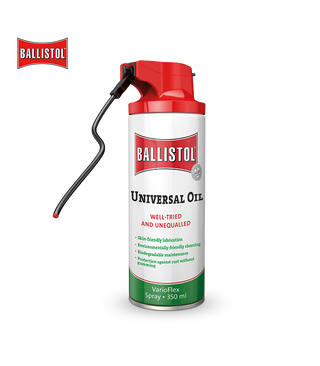
An oil lubricant spray is the right tool when metal needs protecting from damp, or a part has rusted or seized. A thin oil creeps into fine gaps in threads and hinges, loosens rust and leaves a film that keeps moisture off, which a dry PTFE film doesn't do.
Ballistol Universal Oil covers those jobs: seized bolts, rusty gate hinges, padlocks on an allotment, tools in a damp shed. Our guide on how to unfreeze a frozen lock uses it in the keyway, and the squeaky hinges and stiff locks page lists the rest.
What about bike and e-bike chains?
Bike and e-bike chains need a dedicated chain lube rather than a general lubricant spray, because the lube has to get inside the rollers and stay there through rain and road salt. On an e-bike, switch it off and keep every spray away from the motor, display, connectors and brake discs. The bike chain lube guide covers wet and dry lubes.
What mistakes do people make with lubricant sprays?
The most common mistake with a lubricant spray is using too much. The excess runs out, collects dust and ends up on carpets and floors.
- Oil in a dusty lock. It works for a few weeks, then gums up with grit. Use a dry spray indoors.
- Oil on top of graphite. If a lock has had graphite powder in it, blow out the loose powder first, as the two make a paste.
- Any lubricant near brakes. A trace on a disc or pad cuts braking. Cover the brakes or work well away from them.
- Treating a water-displacing spray as a long-term lubricant. A water-displacing multi-purpose spray does lubricate lightly, but a part that needs to keep running smoothly lasts longer on a dedicated lubricant. Our multi-purpose oil comparison sets out which job suits which.
How can you tell the lubricant spray has worked?
A lubricant spray has worked when the part moves freely and quietly: the key turns without force, the drawer runs to the back without juddering, and the hinge no longer squeaks. A dry spray should leave no sticky film.
Do it again when the part starts to stick or squeak. Expect every 6 to 12 months indoors, and every couple of months for outdoor locks and seals through a wet winter.
Questions people ask
What is silicone spray used for? Silicone spray is used to keep rubber and plastic parts supple and sliding freely, such as car door and boot seals, uPVC window gaskets and the O-rings on hose fittings. Keep it off floors, steps, brakes and windscreens, because it leaves them slippery or smeared.
How long does a dry lubricant spray take to dry? A dry PTFE lubricant spray takes a few minutes to dry at normal room temperature, once its solvent has evaporated. Leave the lock, runner or hinge alone until then so the dry film settles evenly before you use it.
What is a dry lubricant spray? A dry lubricant spray carries a solid lubricant such as PTFE in a solvent that evaporates within a few minutes, leaving a thin dry film instead of a wet, oily one. Dust and grit don't stick to that film, which is why it suits locks, drawer runners and sliding doors.
What is the best lubricant spray for locks? A dry PTFE lubricant spray is usually the best choice for a lock that sticks because of dust and grit, as it leaves no oily film for dirt to collect in. For a lock that freezes or sits in damp air outdoors, a thin penetrating oil that keeps moisture off the pins suits better.
Can you use silicone spray on car door seals? Yes, a silicone lubricant on car door and boot seals keeps the rubber supple and makes it less likely to freeze to the frame in a frost. Wipe the seal clean, apply a thin coat with a cloth and buff off the excess, keeping it off the glass.
For the locks, runners and sliding parts around the house, Ballistol PTFE Spray is the dry lubricant spray to keep in the cupboard. For advice on a particular job, call +44 (0) 7817 267314 or email sales@ballistol.co.uk.
Written by Ballistol UK. How we write and check our guides.
More guides: How to Lubricate a Garage Door · How to Unfreeze a Frozen Lock · uPVC Window Maintenance
This guide is general advice. If you're unsure whether a product suits your item, contact Ballistol UK or a qualified professional first, and don't use it until your concerns have been answered.