Rubber is not one material. A car door seal, an O-ring in a fishing reel, a pair of wellies and a foam gasket can all be called rubber, and they react to oil in different ways. That is why the honest answer to "does Ballistol damage rubber?" depends on which rubber you mean.
The rule of thumb is simple: if a rubber or plastic is resistant to ordinary mineral oil, Ballistol Universal Oil won't harm it. Soft natural rubber and foam are the exceptions, and a 24-hour test on a hidden spot tells you which you have.
Last checked: October 2026
The short version: no, Ballistol does not damage oil-resistant rubber, such as most modern O-rings, seals and hoses, and it is sold for keeping rubber car door seals supple in winter. Soft natural rubber that is not oil-resistant can swell or turn brittle over time, and foam rubber can soften. Test on a hidden spot for 24 hours first, and use silicone oil on rubber you want to keep supple.
| Quick facts | |
|---|---|
| Safe on | Oil-resistant rubber, most modern O-rings, seals and hoses, hard plastics, polymer gun frames |
| Take care with | Soft natural rubber, foam rubber and sponge seals, caulk and sealants |
| Test time | 24 hours on a hidden spot |
| How much | A thin film on a cloth, with the excess wiped off |
| Never on | Tyre treads, brake discs and pads, the hop-up rubber of an airsoft gun |
In this guide
Does Ballistol damage rubber?
Ballistol does not damage rubber that is resistant to mineral oil, which covers most modern O-rings, seals, hoses and synthetic trims. It can affect soft natural rubber that is not oil-resistant, which may swell or turn brittle with long contact, and it can soften foam rubber.
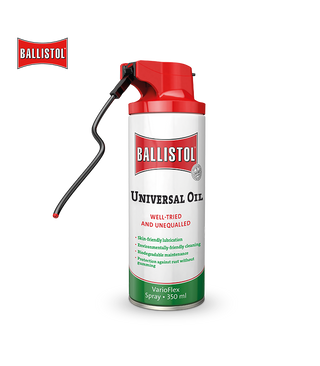
Ballistol Universal Oil is a mineral-oil-based product first made in 1904 as a gun oil for the German army. It is still made in Germany by F.W. Klever GmbH. The product page describes it as maintaining oil-resistant synthetic material, keeping it elastic and stopping it drying out, and protecting rubber car door seals in winter.
An older version of this article said natural rubber was barely affected and that some synthetic rubbers were more at risk. That had it the wrong way round, so we've corrected it here.
Which types of rubber are safe with Ballistol?
The rubbers and plastics that are safe with Ballistol are the ones made to resist oil. Our page on whether Ballistol is safe on plastic, rubber and paint has the full list; the short version is below.
- Safe: oil-resistant rubber, including most modern O-rings, seals and hoses; hard plastics such as PVC, polyethylene, ABS and PTFE; polymer gun frames and stocks.
- Take care: soft natural rubber that isn't oil-resistant, which can swell or turn brittle over time; foam rubber, sponge seals and expanding foam, which prolonged contact can soften; caulk and sealants.
- Keep it off: tyre treads and anything to do with your brakes. That's about grip, not damage. The Highway Code guidance on vehicle maintenance makes clear that tyres and brakes must be kept in good, safe condition.
If you don't know what a rubber part is made of, assume it might be natural rubber and test it.
How do you test Ballistol on rubber first?
To test Ballistol on rubber, put a small drop on a hidden part of the item, leave it for 24 hours, wipe it off and check the surface. If the rubber hasn't softened, swollen, clouded or changed colour, it is fine to use.
- Clean a small area somewhere out of sight, such as the inside edge of a seal or the underside of a grip.
- Put one drop of oil on it with a cotton bud.
- Leave it for 24 hours at room temperature.
- Wipe it off with a dry cloth.
- Press the spot with a fingernail and compare it with an untreated area next to it.
Any stickiness, a spongy feel, a raised patch or a change of colour means that rubber is not oil-resistant. Stop there and use silicone oil instead.
Which Ballistol product suits which rubber job?
Rubber that needs protecting, rubber that must stay perfectly supple, and rubber that only needs cleaning each have a better product. This table sets out which one fits.
| Job | Product | Why |
|---|---|---|
| Car door seals in winter, oil-resistant trims and synthetic rubber | Ballistol Universal Oil | Keeps oil-resistant material elastic and protects door seals in winter |
| O-rings and seals on CO2, gas and airsoft guns, and rubber you want kept supple | Ballistol Silicone Oil | Kind to rubber seals, which mineral oil can make swell |
| Cleaning plastic trim, dashboards and artificial leather | Universal & Plastic Cleaner | Removes dirt, grease and nicotine film, and is silicone-free |
How do you use Ballistol on rubber seals?
Using Ballistol on rubber seals means a clean, dry seal and a very thin film of oil, not a soaking. Car door seals are the most common job, and treating them before winter stops them sticking to the frame on frosty mornings.
- Wipe the seal with a damp cloth to remove grit, then let it dry completely.
- Put a little oil on a soft lint-free cloth rather than spraying the seal directly, so none drifts onto the glass.
- Wipe it along the seal in one pass.
- Leave it for 10 minutes, then wipe off anything still sitting on the surface.
- Repeat every 4 to 6 weeks from November to March, and after every car wash.
Keep oil off windows and wiper blades, as it smears. Our guide on how to open a frozen car door covers the winter routine in more detail. The same thin-film approach works for rubber grips and recoil pads on guns once you've tested them.
How can you tell if oil has affected rubber?
Rubber that oil has affected usually feels tacky or spongy, looks swollen or shiny where it was matte, or starts to crack when you flex it. Healthy rubber feels firm, springs back when pressed and keeps its colour.
Signs you need to stop and switch products: a seal that no longer sits flat in its groove, an O-ring that has grown and won't go back on, or a grip that leaves a dark mark on your hand. Clean the oil off with warm soapy water, let the part dry, and use silicone oil from then on.
Signs a treated seal needs doing again are simpler: it looks dry or chalky, or the door starts sticking on cold mornings.
Questions people ask
Is Ballistol safe on rubber O-rings? Ballistol is safe on most modern O-rings, because they are made from oil-resistant rubber. For the O-rings and seals on CO2 and gas guns, silicone oil is the better choice, as mineral oil can make those seals swell.
Can you put Ballistol on car door seals? Yes, Ballistol Universal Oil is sold for protecting rubber car door seals in winter. Wipe a thin film onto a clean, dry seal and wipe off the excess after 10 minutes.
Can you use Ballistol on wellies? Only after testing, because many wellies are made from natural rubber, which can swell or go brittle with oil. Try a drop on a hidden spot for 24 hours and follow the maker's care label.
Does Ballistol make rubber swell? Ballistol does not make oil-resistant rubber swell, but soft natural rubber that isn't oil-resistant can swell over time. A 24-hour test on a hidden spot shows which type you have.
Can you put Ballistol on tyres? No, don't put Ballistol or any oil on tyre treads, as it can reduce grip on the road. Keep oil away from brake discs and pads for the same reason.
Ballistol Universal Oil and the rest of the Universal Oil range look after metal, wood, leather and oil-resistant rubber. Safety data sheets are on our technical data page. If you're unsure about a rubber part, call +44 (0) 7817 267314 or email sales@ballistol.co.uk before you treat it.
More guides: How to Open a Frozen Car Door · How to Soften Leather · How to Clean Car Battery Terminals
Written by Ballistol UK. How we write and check our guides.
This guide is general advice. If you're unsure whether a product suits your item, contact Ballistol UK or a qualified professional first, and don't use it until your concerns have been answered.
Buying for a gun shop, club or range? See trade prices