That white, grey or blue-green crust on top of a car battery is corrosion. It builds up between the clamp and the battery post, chokes the current the starter motor needs, and is one of the most common reasons a car turns over slowly or just clicks on a cold morning.
You can clean car battery terminals at home in about half an hour with a spanner, an old toothbrush, bicarbonate of soda and warm water. The step most people skip is protecting the clean metal afterwards, which is what stops the crust growing straight back.
Last checked: October 2026
The short version: switch everything off, then undo the negative clamp first and the positive second. Scrub the posts and clamps with a paste of bicarbonate of soda and water until the fizzing stops, wipe with a damp cloth and dry. Refit positive first, then negative, and wipe a thin film of Ballistol Universal Oil over the outside of the clamps.
| Quick facts | |
|---|---|
| Time needed | 20 to 30 minutes |
| You'll need | Ballistol Universal Oil (the 15 ml Oil Pen or a 50 ml bottle), a spanner to fit the clamp nuts (often 10 mm), an old toothbrush, bicarbonate of soda, warm water, kitchen roll, gloves and safety glasses |
| How often to check | Every 3 months, and always before winter |
| Best time of year | October or November, before the first cold snap |
| Avoid | Any metal tool touching both posts at once, and cleaning paste running into the battery vents |
In this guide
- What is the white or green crust on car battery terminals?
- Is it safe to clean car battery terminals yourself?
- How to clean car battery terminals step by step
- How do you protect battery terminals from corrosion?
- What if the battery clamp nut is seized?
- How often should you check car battery terminals?
- How can you tell the battery terminal clean worked?
- Questions people ask
What is the white or green crust on car battery terminals?
The crust on car battery terminals is mostly lead sulphate, which looks white or grey, and copper sulphate, which looks blue-green where the clamps are copper or brass. It forms when traces of acid vapour escape from the battery and react with the metal, helped along by damp air under the bonnet.
A little build-up on an older battery is normal. Heavy crust on a newer battery can point to a loose clamp or a charging fault. It matters most in winter, when a cold battery gives less power just as the engine needs more, so a terminal that coped in August can leave you stranded in January.
Is it safe to clean car battery terminals yourself?
Cleaning car battery terminals is a safe home job if you treat the battery with respect. A lead-acid battery contains sulphuric acid and can give off explosive hydrogen, so wear gloves and safety glasses, keep flames, cigarettes and sparks well away, and work in the open air or with the garage door up.
- Take off rings and metal watch straps first.
- Never let a spanner touch both posts, or the positive post and the car body, at once. It will spark.
- On hybrids and electric cars, only touch the ordinary 12-volt battery. Leave anything with orange high-voltage cables to a qualified technician.
- Some cars need a radio code or a stop-start reset after the battery is disconnected. Check the handbook first.
The HSE leaflet on using electric storage batteries safely covers the hazards in more detail.
How to clean car battery terminals step by step
To clean car battery terminals properly you need the clamps off the posts, because most corrosion hides where they touch. Mix a heaped tablespoon of bicarbonate of soda into about 250 ml of warm water first.
- Turn off the ignition and lights, and take the key out or move the keyless fob away from the car.
- Undo the negative clamp first (minus sign, usually black) and tuck it aside so it can't spring back onto the post.
- Undo and lift off the positive clamp (plus sign, usually red).
- Scrub the posts and the inside of both clamps with the toothbrush dipped in the bicarbonate mix. It fizzes as it neutralises the acid residue; keep going until it stops.
- Wipe everything with a cloth dampened in clean water, then dry it thoroughly with kitchen roll. Don't pour water over the battery.
- If the posts or clamps are still dull, rub them lightly with fine abrasive paper or a terminal brush.
- Refit the positive clamp first and tighten it until you can't twist it on the post by hand. Then refit the negative clamp the same way.
- Wipe or brush a thin film of Universal Oil over the outside of both clamps and the exposed part of each post.
- Start the car to check it cranks properly, and reset the clock and radio if needed.
Keep the paste away from the vent caps or holes on top of the battery, as bicarbonate of soda that gets inside shortens its life.
How do you protect battery terminals from corrosion?
You protect battery terminals from corrosion by sealing the clean, tightened clamps against damp air. Do it after the clamps are back on, not before, because the join between clamp and post needs clean metal touching clean metal.
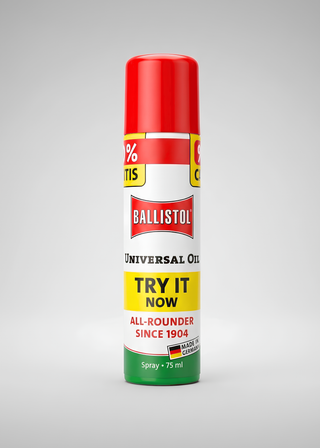
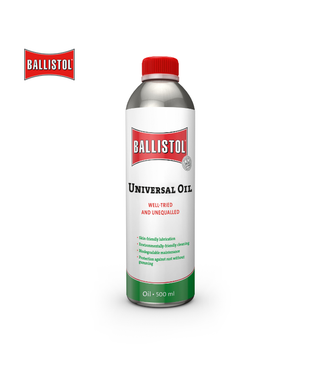
Ballistol Universal Oil suits the job because it has very low electrical conductivity, pushes moisture out of fine gaps and doesn't harden or go sticky over time. Ballistol has been made in Germany by F.W. Klever GmbH since 1904, when it was first produced as a gun cleaning oil for the German army. The Oil Pen puts it exactly where you want it, with no overspray.
Petroleum jelly and battery terminal grease also work and last a little longer, but they collect grit and are messier to clean off. Keep any of them to a thin coat. For plugs, switches and connectors, see oil for electrical contacts and terminals.
What if the battery clamp nut is seized?
A seized battery clamp nut is common on older cars, where the corrosion has crept into the thread. Brush off the loose crust, apply a few drops of Universal Oil to the nut and bolt, and leave it for 10 to 15 minutes so it can work into the thread before you try the spanner again.
Don't lever the clamp off with a screwdriver, as prising against the post can crack the seal at its base. Twist it gently from side to side, or use a clamp puller from a motor factor. For badly rusted bolts, see freeing a seized bolt with penetrating oil.
How often should you check car battery terminals?
Check car battery terminals every 3 months and always in October or November before the cold weather sets in. A cleaned, oiled terminal usually stays clear for a year or more.
Look more often if the car does lots of short journeys or lives near the coast. Vehicles laid up for the winter are best kept on a smart charger with the clamps given the same oily wipe; see storing a classic car over winter and our car and motorbike care page for the other winter jobs.
How can you tell the battery terminal clean worked?
A good battery terminal clean shows straight away. The engine should crank briskly rather than labour, the clamps shouldn't move when you try to twist them by hand, and the metal should look bright under its thin film of oil.
With a multimeter, a fully charged battery reads about 12.6 volts after the car has stood for a few hours; around 12.4 volts means it needs a charge. If the car still struggles with clean, tight terminals, or the crust is back within a month, have the battery and charging system tested.
Questions people ask
Can corroded battery terminals stop a car starting? Yes. Corrosion between the clamp and the post adds resistance, so the starter motor can't draw enough current. Signs are slow cranking, clicking or dimming dashboard lights.
Do you have to disconnect the battery to clean the terminals? For a proper clean, yes, because most of the corrosion sits between the clamp and the post. Always take the negative clamp off first and put it back last.
Will Coca-Cola clean battery terminals? It loosens some corrosion, but it leaves a sticky, sugary film that attracts dirt. Bicarbonate of soda and water does the job better and neutralises the acid residue at the same time.
What causes battery terminal corrosion? Acid vapour escaping from the battery reacts with the lead and copper of the posts and clamps, helped by damp air. Loose clamps, overcharging and an ageing battery all make it worse.
Can you put Vaseline on battery terminals? Yes, a thin layer on the outside of clean, tightened clamps helps keep damp air out. A thin film of oil does the same job and is cleaner to remove at the next check.
Ballistol Universal Oil comes as a 15 ml Oil Pen, bottles and spray cans in the Universal Oil range, and also looks after locks, hinges and door seals. Safety data sheets are on our technical data page. For advice on your car, call +44 (0) 7817 267314 or email sales@ballistol.co.uk.
More guides: How to Open a Frozen Car Door · How to Stop Rust on Metal · How to Clean Windscreen Glass
Written by Ballistol UK. How we write and check our guides.
This guide is general advice. If you're unsure whether a product suits your item, contact Ballistol UK or a qualified professional first, and don't use it until your concerns have been answered.