Most people buy cuticle oil, paint it on once or twice, see no change and leave the bottle in a drawer. The oil isn't the problem. Cuticles respond to a little oil worked in every day, not a lot of oil now and then.
Learning how to use cuticle oil properly takes about two minutes a day: one drop per nail, a short massage, and the right moment, which for most of us is last thing at night. In a UK winter, when cold wind outside and central heating inside dry hands out from November to March, that small routine makes the most difference.
Last checked: October 2026
The short version: start with clean, dry hands. Put one drop of oil on the base of each nail, then massage it into the cuticle and the nail with the pad of your opposite thumb for 20 to 30 seconds. Leave it to soak in for 5 minutes. Do it once a day, ideally at bedtime, and twice a day in winter.
| Quick facts | |
|---|---|
| Time needed | About 2 minutes for both hands |
| How much | 1 drop per nail, so around 10 drops for both hands |
| How often | Once a day, or twice a day from November to March |
| Best time | At bedtime, or after a bath, a shower or the washing up |
| You'll need | A care oil for nails and skin such as Neo Ballistol, a soft towel, a cotton bud or orange stick (optional) |
| Avoid | Broken, sore or red skin, cutting the cuticle, oiling nails just before painting them |
In this guide
What does cuticle oil do?
Cuticle oil keeps the cuticle, the thin strip of skin at the base of each nail, and the nail itself soft and supple. Supple cuticles are less likely to go dry, rough and ragged, and nails that are oiled regularly stay supple rather than rough.
The cuticle meets water, soap and cold air every day, so it dries out faster than the rest of the hand. Hand cream mostly stays on the backs of the hands; a drop of oil worked into the base of the nail goes where it's needed.
Neo Ballistol, which we sell as Home Remedy, is made for exactly this: hand and foot care, manicure and keeping fingernails and toenails supple so they don't become rough.
How to use cuticle oil step by step
Using cuticle oil well is mostly about clean nails, a small amount and a proper massage. These steps take about two minutes for both hands.
- Wash your hands in warm (not hot) water and pat them dry, including round the nails.
- Remove any old nail polish first if you plan to repaint, as oil under fresh polish stops it sticking.
- Put one drop of oil on the base of each nail, where the cuticle meets the nail.
- Massage each drop into the cuticle and across the nail with the pad of your opposite thumb, in small circles, for 20 to 30 seconds per nail.
- Work any spare oil into the sides of the nails and the fingertips.
- Leave it to soak in for about 5 minutes before you pick up your phone, a book or anything you'd rather not mark.
- If the cuticles are soft after a bath, ease them back gently with a towel or a cotton bud. Don't cut them.
The massage matters as much as the oil. If your hands still look shiny after 10 minutes, use less next time.
How often should you use cuticle oil?
Use cuticle oil once a day as a habit, and twice a day when your hands are working hard or the weather is cold and dry. Daily use for one to two weeks is usually enough to see softer, smoother cuticles.
Twice a day suits hands that take a beating: washing up by hand, gardening or working on an allotment, cleaning guns or tools, cycling through the winter, or frequent hand washing at work.
When is the best time to apply cuticle oil?
The best time to apply cuticle oil is at bedtime, because the oil then has several hours to soak in without being washed straight off. The next best time is just after a bath, a shower or the washing up, when the skin round the nails is warm and soft.
If you're heading out to the shed or to a shoot, oil your nails when you get home rather than before. Oily fingers on tools, gun stocks or a steering wheel are no help to anyone.
Can you use a skin care oil instead of cuticle oil?
Yes. A care oil made for skin and nails works as a cuticle oil, and many people find one bottle does nails, dry hands and hard skin on the feet. The product does not have to say "cuticle" on the label to do the job.
Neo Ballistol is a blend of pure white mineral oil with herbal ingredients and essential oils, including mint and aniseed oil, made without preservatives. It soaks in quickly, and the same bottle softens hard, dry skin on the heels or can be rubbed into the feet before a long walk.
Because it contains essential oils, test it first if you have sensitive skin: put a drop on the inside of your wrist and leave it for 24 hours. If the skin goes red or itchy, don't use it. Keep it away from your eyes.
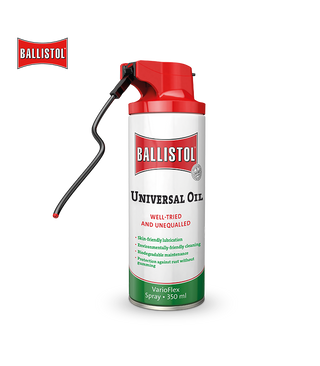
One thing not to do: don't reach for the workshop oil. Ballistol Universal Oil is for metal, wood, leather and rubber, and Ballistol's own advice is to use Neo Ballistol for skin care. Both come from the same maker: Ballistol has been made in Germany by F.W. Klever GmbH since 1904, and Neo Ballistol has been made to the same recipe for around 90 years. The rest of the People Care range is listed on its own page.
How do you stop cuticles drying out in winter?
Cuticles dry out in winter because cold, windy air outside and central heating inside both pull moisture from the skin, and frequent hand washing strips away what is left. Stopping them drying out means protecting your hands as well as oiling them.
- Wear rubber gloves for washing up and cleaning. The NHS advice on looking after your nails recommends this if your hands are often in water or you use cleaning products.
- Wear gloves outdoors in cold weather, and gardening gloves for jobs in the garden or on the allotment.
- Oil twice a day from November to March, with one of those at bedtime.
- Don't bite or pick at the skin round your nails, however tempting a dry edge is.
Go and see a GP if the skin round a nail becomes sore, red, swollen and warm, or if a nail changes shape or colour and you don't know why. Cuticle oil is for everyday care, not for treating a problem.
How can you tell cuticle oil is working?
Cuticle oil is working when the cuticles look smooth and flat against the nail rather than white, flaky or ragged, and the skin at the base of the nail feels soft when you press it. Most people see that after one to two weeks of daily use.
Signs you need to oil again, or more often: the cuticles look white and dry an hour after washing your hands, or the skin at the corners of the nails starts to feel rough. If that happens in the middle of winter, go back to twice a day.
Questions people ask
Should cuticle oil go on before or after nail polish? Cuticle oil should go on after nail polish, once the polish is completely dry. Oil on a bare nail stops new polish sticking, so wipe the nails clean before you paint them and save the oil for afterwards.
Do you put cuticle oil or hand cream on first? Put cuticle oil on first and hand cream second. Give the oil a couple of minutes to soak into the cuticles, then use the cream on the rest of your hands.
Can you use cuticle oil on toenails? Yes, cuticle oil works on toenails in the same way as on fingernails. One drop per toenail, massaged in after a bath or shower, keeps the nails and the skin round them supple.
Can you leave cuticle oil on overnight? Yes, leaving cuticle oil on overnight is a good way to use it. Apply it at bedtime and let it soak in, and if your hands are very dry, a pair of thin cotton gloves stops it rubbing off on the bedding.
Should you cut your cuticles? No, it's best not to cut your cuticles at home, because they protect the base of the nail. Soften them with oil and ease them back gently with a towel after a bath instead, and don't bite or pick the skin round the nails.
Neo Ballistol comes in a 100 ml bottle that fits a washbag and a 250 ml bottle for the bathroom shelf. If you're not sure it suits your skin, call us on +44 (0) 7817 267314 or email sales@ballistol.co.uk before you use it.
More guides: How to Soften Leather · How to Protect Dog Paws in Winter · How to Stop Rust on Metal
Written by Ballistol UK. How we write and check our guides.
This guide is general advice. If you're unsure whether a product suits your item, contact Ballistol UK or a qualified professional first, and don't use it until your concerns have been answered.